Concrete
Our concrete scope covers the full range of commercial flatwork, structural concrete, and site hardscape. Because we self-perform the earthwork, utilities, and subgrade preparation that precede every pour, there are no handoff gaps and no waiting on prior subs. From slab-on-grade and post-tension decks to engineered retaining walls and stormwater infrastructure, our crews carry 30+ years of experience across Central Texas commercial construction.
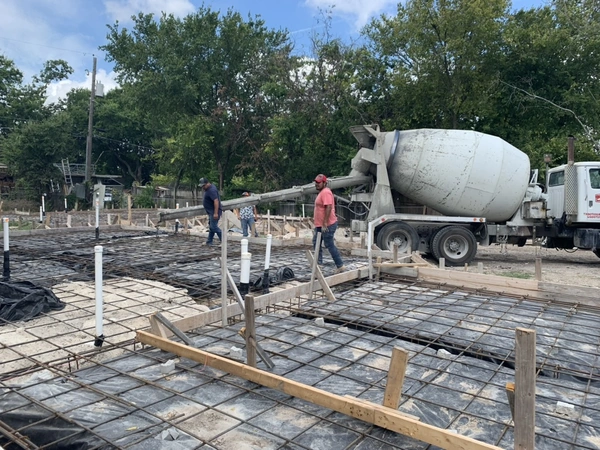
Concrete Slabs
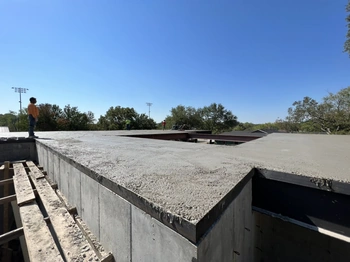
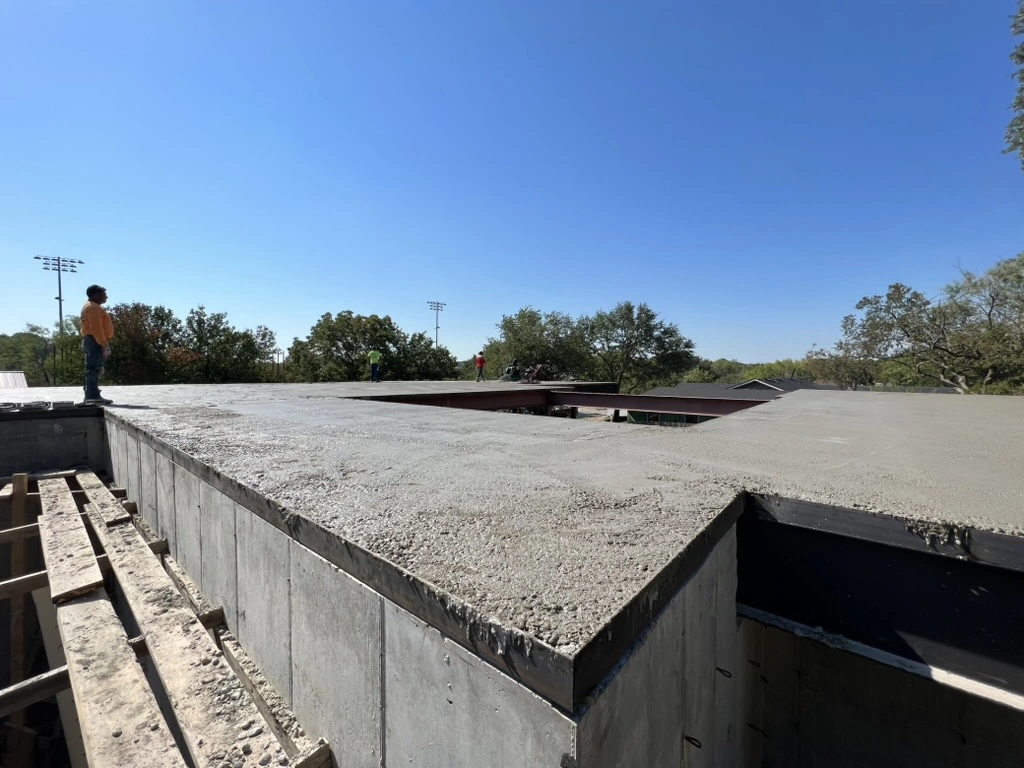
Concrete slabs are the critical path on nearly every commercial structure. We sequence pours around the project schedule and self-perform the earthwork and utilities that precede slab placement - no handoff gaps, no waiting on prior subs. Our teams carry 30+ years of experience across slab-on-grade, post-tension decks, and elevated pours for multi-family, retail, and tilt-wall industrial projects.
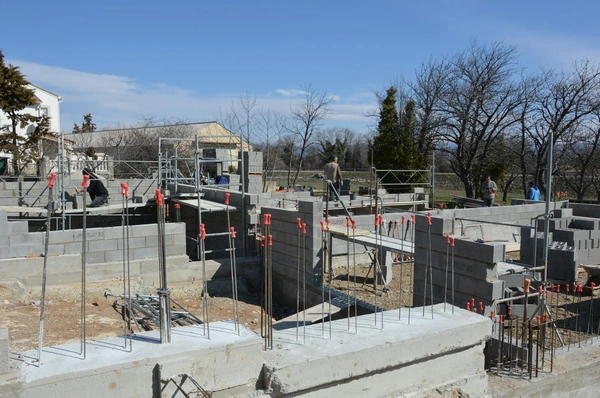
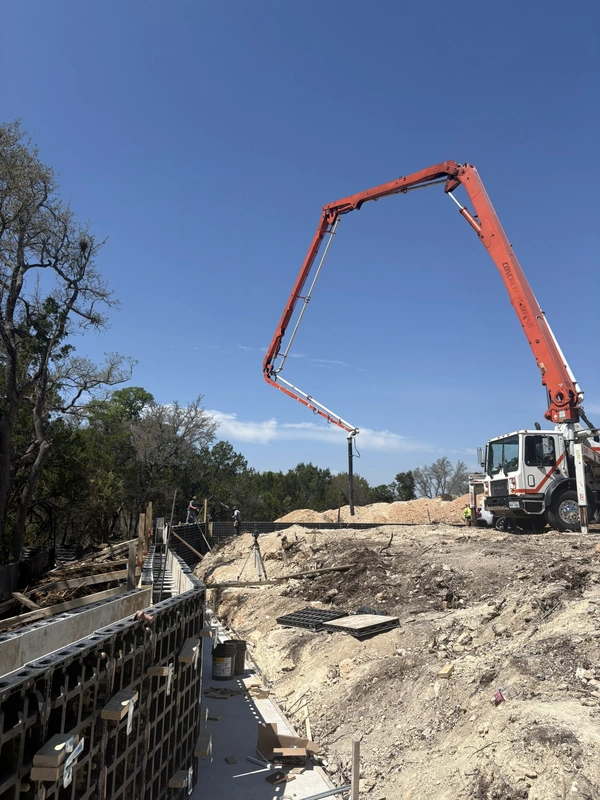
Retaining Walls
Retaining walls on commercial projects are structural systems that perform under sustained lateral load - often in challenging ground conditions. We build across the full range: grade separations, cut walls, fill retention, and tiered systems for developments with significant elevation change. Because we self-perform earthwork, we already know the soil profile before wall construction begins.
Detention Ponds
Austin commercial development requires stormwater infrastructure that satisfies COA drainage ordinances and TCEQ regulations. We build detention ponds, retention ponds, water quality ponds, and underground systems - coordinated with civil engineers and the COA Watershed Protection Department. Because we self-perform earthwork and storm drain, pond construction integrates seamlessly into the broader site package.
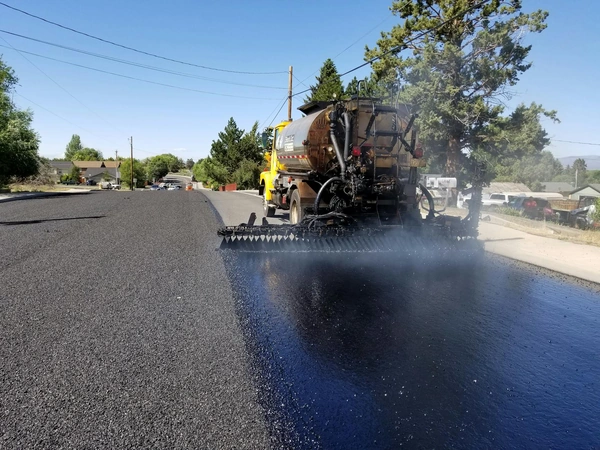
Paving
We deliver commercial paving from subgrade to finished surface. Because we self-perform the earthwork and grading that precede every paving scope, there are no handoff gaps. We work across parking lots, drive lanes, fire access roads, and site entries - all coordinated against civil plans and COA requirements for striping, ADA routes, and utility covers.
Ready to put our process to work on your project?
Request a bid and see how we simplify your next project.
Request a bid and see how we simplify your next project.
Common Questions
We're Austin-based and owner-operated. We don't over-leverage our crews. If we're on your schedule, we're on your site. We know that if the concrete slab isn't poured, the rest of your project sits still.
We're locals. We know the City of Austin and surrounding municipality requirements inside and out. We build to pass inspection the first time because we know a "re-inspect" is just a fancy word for a delay.
We don't over-leverage our crews across too many projects at once. When we commit to a pour date, we show up with the people and equipment to hit it. Because we self-perform the earthwork and underground utilities that precede the slab, there's no waiting on a prior sub to release the work - the handoff is internal and seamless.
We handle slab-on-grade for retail, industrial, and warehouse projects; post-tension decks for multi-family podium and parking structures; elevated deck pours for multi-story construction; grade beams and footings; and tilt-wall casting slabs. Our crews carry 30 years of combined experience across all of these slab systems.
Wall type depends on retained height, surcharge loading, available right-of-way, soil conditions, and schedule. We work with the project engineer of record to confirm the right system - whether that's cast-in-place concrete for heavy loads, CMU for constrained footprints, or soldier pile and lagging for shoring applications. Over-specifying or under-specifying both create problems downstream.
Yes. Expansive clay is one of the most common conditions we deal with in the Austin metro area. We pay particular attention to drainage layers, weep provisions, and backfill compaction specifications that protect long-term wall performance in soils that move seasonally. Because we self-perform earthwork, we already know the soil profile before wall construction begins.
No. All retaining wall construction is self-performed by our crews - from footing layout through backfill and compaction. We don't sub out the work a second time, which means direct accountability for quality, schedule, and coordination with our earthwork and grading operations on the same site.
A detention pond temporarily holds stormwater and releases it slowly through a controlled outlet - the basin drains between storm events. A retention pond holds water permanently with no direct outlet to the storm sewer, often used for irrigation reuse or where site drainage requirements mandate no discharge. The right system depends on your site's permit requirements, available footprint, and COA drainage ordinances.
Yes. We coordinate directly with the City of Austin Watershed Protection Department, civil engineers, and the owner's representative to ensure the detention or retention facility meets all permit requirements - including Barton Springs Zone constraints, impervious cover limits, and water quality controls for environmentally sensitive areas. We handle the inspection coordination and as-built documentation needed for COA closeout.
Yes. When above-grade basin footprint isn't available, we install underground detention systems using large-diameter pipe storage, precast concrete vaults, or proprietary modular systems. The integration with the site storm sewer is self-performed, keeping the entire scope under one subcontract and one schedule.
It depends on traffic loading, budget, and longevity requirements. Asphalt is the standard for most commercial parking and drive-lane applications - it's cost-effective and performs well under normal conditions. Concrete is the better choice for heavy-load areas like truck courts, fire lanes, and high-traffic drive aisles where long-term durability matters most. We can help evaluate the right surface for each area of your site.
Yes. Accessible parking stalls, routes, ramps, and detectable warning surfaces are all part of our paving scope. We lay out ADA-compliant elements to current ADA Standards for Accessible Design and Texas Accessibility Standards as part of the work - reducing the number of subcontractors a GC needs to coordinate at closeout.
Yes. We regularly structure phased paving sequences that keep portions of a parking lot or drive lane operational while new sections are being built. Traffic control, temporary striping, and coordination with the GC and property manager are all part of how we plan the work.